



What Banks Should Know Before Choosing a Digital Analytics Platform
- Reading Time: 10 minutes
A digital analytics platform unifies customer behavior data from every banking channel, including app, web, branch, and ATM, into a single, privacy-compliant view. For banks, this is what makes identity resolution, data privacy, and deployment choices matter more than in most other industries.
Yet many banks still analyze customer behavior through fragmented systems that were never designed to work together. The result is a partial view of the customer and, often, missed opportunities to improve the experience.
In this guide, we’ll explore what a digital analytics platform does in a banking context, why identity resolution and data privacy matter more here than in most industries, and what banks should look for when choosing one.
What Is a Digital Analytics Platform for Banks?
A digital analytics platform for banks is a system that collects behavioral data from every digital and physical touchpoint, the mobile app, the website, branch tablets, and ATMs, and unifies it under a single customer identity. This is different from generic web analytics tools, which typically track only one channel and cannot recognize the same customer across sessions or devices. In banking, this unified, cross-channel view is what makes accurate segmentation, churn prediction, and personalization possible in the first place.
The Problem With Fragmented Banking Data
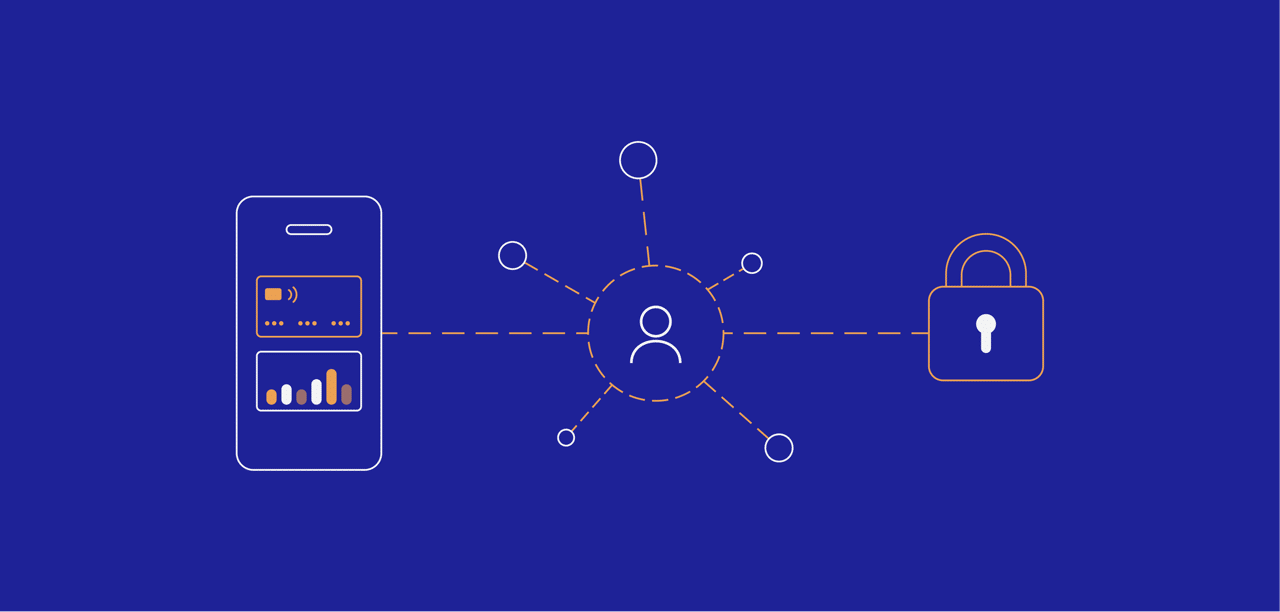
Picture a single banking customer on an ordinary Tuesday. She checks her balance on the mobile app at 8am, browses loan application screens on the website at noon without signing in, then signs in a few minutes later, withdraws cash from an ATM at 3pm, and completes a transaction at a branch that evening. Four different touchpoints logged four different fragments of her day, and none of them talked to each other. The mobile team sees a session. The web team sees an anonymous visitor who became a logged-in user. The branch system sees a transaction. Nobody sees her.
For most industries, this is a customer experience problem. For a bank, it is also an analytics problem. You cannot measure a digital journey you can only see one quarter of. You cannot detect intent, friction, or churn risk when every channel reports only on itself, which is where event tracking in banking becomes essential. The core issue is not any missing tool. It is that the data a bank needs to understand its customers is scattered across systems that were never built to be analyzed together.
Sign up to drive your business with the power of data
What a Digital Analytics Platform Tracks in Banking
In banking, the digital footprint is wider than many teams assume. It is not only the mobile app and the website. It also includes the branch tablet, the ATM screen, the onboarding flow, and the in-app investment or loan journey. A digital analytics platform’s first job is to treat all of these as sources of behavioral data, capturing every screen view, tap, drop-off, and completed action automatically, without requiring manual tagging on each release.
Automatic collection, or auto-capture as it is called widely in the industry, matters because banking apps change constantly, and digital product teams rarely have spare capacity to hand instrument every new screen. When events are captured as they happen across web, mobile, and offline channels, analytics teams work with a complete record rather than whatever happened to be tagged in time and can focus on the key metrics for data-driven digital banking that matter most.
Collection alone, however, is not analysis. The more valuable step is unifying those events under a persistent identity through a unified digital data foundation, so the same customer is recognized across app, web, other digital touchpoints, and across devices and sessions over time, rather than appearing as a brand-new anonymous user each time. That persistence is what turns raw event streams into a customer journey you can actually study.
Identity Resolution Across Channels
The same person routinely shows up as several different “users.” She is an anonymous visitor browsing on a laptop, a logged in user on the mobile app, and a customer number entered at a branch terminal. Identity resolution is the process of recognizing that these are one human being and merging them into a single record instead of three disconnected ones.
For a bank, this is not a convenience feature. It is the precondition for any accurate cross-channel analysis. Measuring whether a web campaign drove an app action, or whether a change in branch behavior signals digital churn, only works if the platform knows those touchpoints belong to the same customer. When identity resolution is weak, every downstream number such as conversion, retention, and attribution is quietly built on double counted, fragmented users, and the conclusions drawn from them become unreliable in ways that are hard to notice.
Data Privacy and Security in Banking Analytics
For banks, this is usually the deciding factor. It often determines whether a platform can be considered at all, regardless of how strong its analytics capabilities are. Four areas matter most.
The first is how personally identifiable information is handled at the point of collection. Rather than gathering everything and filtering later, sensitive fields are never captured in the first place. This reflects the broader principles of securing data in digital marketing.
The second consideration is deployment flexibility. Banks in high compliance markets operate under data residency and sovereignty mandates: customer data has to stay within national borders. Local cloud or multi-tenant banking cloud deployments are usually enough to satisfy this. But some banks face stricter constraints. Their regulators, or their own risk teams, won’t allow customer data to leave the bank’s infrastructure at all. The only option that works here is a full on-premises deployment. An analytics platform serving this market needs to support both, ideally without the bank having to take on infrastructure investment or custom development to get there.
The third consideration is access control. In a bank, not every team should see every dataset. The practical requirement is the ability to scope visibility: keeping sensitive analyses, dashboards, and audiences private to the people who own them, while making shared assets available to everyone who needs them. This matters for two reasons. It limits internal exposure and makes internal audits easier, because the bank can demonstrate that access to sensitive analytics is deliberate rather than open by default.
The fourth is independent verification. Security controls are only as trustworthy as the evidence behind them, so it is worth asking what external validation exists rather than relying on the vendor’s own description. Independent certification such as SOC 2 Type II is one form of that evidence, because it reflects an audit of how data is handled over time rather than a one-time claim.
What Unified Data Actually Enables
A unified customer view sitting untouched in a database change nothing on its own. The value appears when clean; persistent identities make cross-channel patterns visible. A customer repeatedly checking loan rates without applying, app engagement dropping in a way that signals churn risk, or a recurring support pattern that emerges well before it becomes a formal complaint all become visible only when the underlying data is connected. These are also the exact inputs that behavioral segmentation and churn prediction models depend on. Run those models on fragmented data, and they only ever see part of the story.
This is not theoretical. İşbank, Turkey’s largest private bank, could not track users consistently across web and mobile, so campaigns ran without a full view of the customer. After unifying that data with Dataroid and using real-time context triggers that power real-time targeting with deterministic logic, İşbank saw four times higher acceptance rates for financial product offers, three times higher conversion rates for pension campaigns, and strong conversion on targeted journeys such as a 33% rate on the gold savings account page and a 38% rate for customers offered an instant credit card limit increase. During the pandemic, this same foundation let more than 400,000 customers update their digital channel preferences without visiting a branch.
İşbank is not the only example. Burgan Bank’s next-generation mobile banking channel, ON Mobil, also partnered with Dataroid to deepen customer insight across its digital channels.
This dependency becomes more pronounced as banks adopt AI. Every AI capability a bank might deploy, from churn prediction and next best action models to agentic AI that answers analytical questions in natural language, is only as good as the data underneath it. A model trained on fragmented, double counted, or inconsistently identified customer records will produce confident answers built on a distorted picture. The industry shorthand for this is garbage in, garbage out, but in banking the stakes are more specific: a mistargeted product offer, a churn model that misses the customers actually leaving, or an AI assistant that reports metrics no two teams calculate the same way. Unified, well-governed behavioral data is not a separate workstream from AI adoption. It is the prerequisite, and banks that invest in the data foundation first are the ones whose AI initiatives produce results they can trust.
What Banks Should Look for in a Digital Analytics Platform
Not every product that captures events is equipped for banking. When evaluating a platform, it helps to check for a few specific things:
- Multi-channel coverage: app, web, branch, and ATM are treated as first class data sources
- Deployment flexibility, with on-premise or local cloud options for institutions
- Not storing or retaining PII or PCI data
- Auditability and independent certification, meaning real-time collection you can verify, supported by third party validation such as SOC 2 Type II
- Identity resolution accurate enough to trust, because every downstream metric depends on it
How to Evaluate a Digital Analytics Platform for Banking
- Map every digital channel your bank actually uses. App, web, branch tablets, ATMs, and any assisted-channel tools should all be on the list, since a platform that misses one channel misses part of the customer.
- Test identity resolution with a real scenario. Ask the vendor to show how the platform recognizes the same customer across an anonymous web session, a logged-in app session, and a branch visit.
- Confirm deployment options against your regulator’s requirements. On-premise if data cannot leave your infrastructure under any circumstance, local cloud if in-country residency is enough.
- Verify PII handling at the point of collection, not after. Ask specifically whether sensitive fields are ever stored.
- Check for independent certification. A vendor’s own description of its security controls is not the same as third-party audit evidence such as SOC 2 Type II.
- Pilot on one real use case before a full rollout. Churn prediction or campaign targeting works well as a pilot, since it surfaces data quality issues that a demo cannot.
When On-Premise Deployment Makes Sense — and When It Doesn't
When it works
- The regulator or the bank’s own risk team does not allow customer data to leave the bank’s infrastructure under any circumstance
- The bank operates in a market with data sovereignty mandates that a local cloud option cannot satisfy
- Internal policy treats on-premise as the default for any system that touches customer PII
When it isn’t necessary
- National data residency rules are satisfied by a local cloud or multi-tenant banking cloud deployment
- The bank does not have spare infrastructure capacity or a team to maintain on-premise systems long-term
- The priority is faster time-to-value rather than infrastructure control
| Deployment Option | Where Data Lives | Best For | |
|---|---|---|---|
|
Local Cloud / Multi-Tenant |
Stays within national borders, shared infrastructure |
Banks meeting data residency rules without heavy infrastructure investment |
|
|
On-Premises |
Entirely within the bank’s own infrastructure |
Banks whose regulator or risk team won’t allow data to leave the organization at all |
|
|
Hybrid |
Mixed, depending on data sensitivity |
Banks transitioning from legacy on-premise systems toward cloud analytics |
|
Common Mistakes Banks Make When Evaluating a Digital Analytics Platform
- Treating identity resolution as a nice-to-have. Without it, every downstream metric such as conversion and retention is built on double-counted, fragmented users. Test it before signing, not after.
- Assuming PII filtering after collection is enough. Sensitive fields should never be captured in the first place, not gathered and cleaned up later.
- Relying on a vendor’s own security claims. Ask for independent evidence such as SOC 2 Type II rather than a self-reported description.
- Choosing a platform for one channel and planning to add the rest later. Multi-channel coverage from day one avoids rebuilding identity resolution logic mid-project.
Key Takeaways
For a bank, the question is rarely about adopting one specific category of tool. It is whether the organization can analyze its customers accurately across every digital channel they use. Fragmented data makes reliable segmentation, personalization, and churn prediction very difficult, no matter how capable the individual channel tools are. A digital analytics platform that unifies app, web, branch, and ATM data under persistent identities, while keeping PII handling, deployment, and auditability aligned with banking’s requirements, is what makes those capabilities work in the first place. As first-party data becomes more important, as AI runs unified data rather than fragmented signals, and as customer journeys spread across more channels, that unified view stops being a nice to have and becomes the foundation every team relies on.
Frequently Asked Questions
What is a digital analytics platform for banks?
It collects behavioral data from every digital touchpoint, including app, web, branch, and ATM, and unifies it under a persistent identity, so the same customer is recognized across channels and over time. This is what makes cross-channel analysis, segmentation, and churn prediction accurate.
How should banks choose a digital analytics platform?
Banks should look for multi-channel coverage deployment flexibility, privacy-centric PII handling independent certification, and accurate identity resolution. Because the same customer appears as different identifiers across channels and devices, identity resolution accurate enough to trust matters most, since every downstream metric depends on it.
Can a digital analytics platform be deployed on-premise for banks?
Yes. Many banks require this for regulatory reasons, and platforms built for the sector offer on-premise or local cloud deployment, so customer data never leaves the bank’s own environment.
How is customer data protected in banking analytics?
Sensitive fields are never captured, combined with role based access controls that limit who can see what.
What is SOC 2 Type II certification and why does it matter for banks?
It reflects an independent audit of how a platform handles data over a period of time, rather than a single self reported claim. For banks, that external validation is a meaningful part of evaluating whether a platform can be trusted with customer data.

YOU MAY ALSO LIKE

Mastering Application Performance Monitoring: Tools and Best Practices

Customer Churn Analytics: Improve Retention with Dataroid

Journey Analytics: How to Optimize the Customer Journey

Cookieless Analytics: How to Prepare for a Future Without Cookies
Mobile Analytics 101: How to Measure and Improve Your App's Performance
Drive your digital growth
Schedule a demo today to learn more on how we can help you unleash the potential of digital using Dataroid.